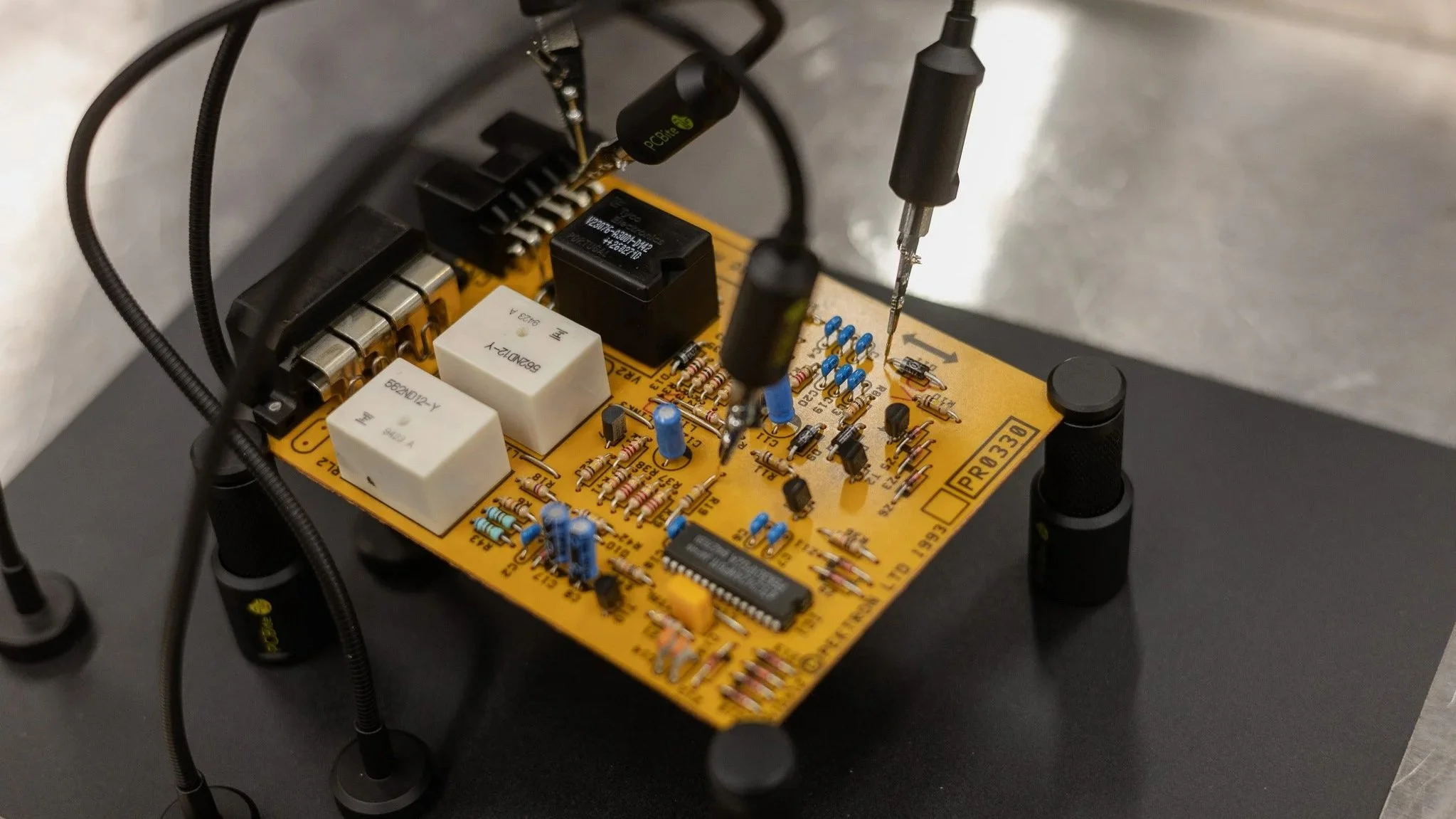
AMR1282 Window ECU Repair: Diagnosing Dead Rear Windows
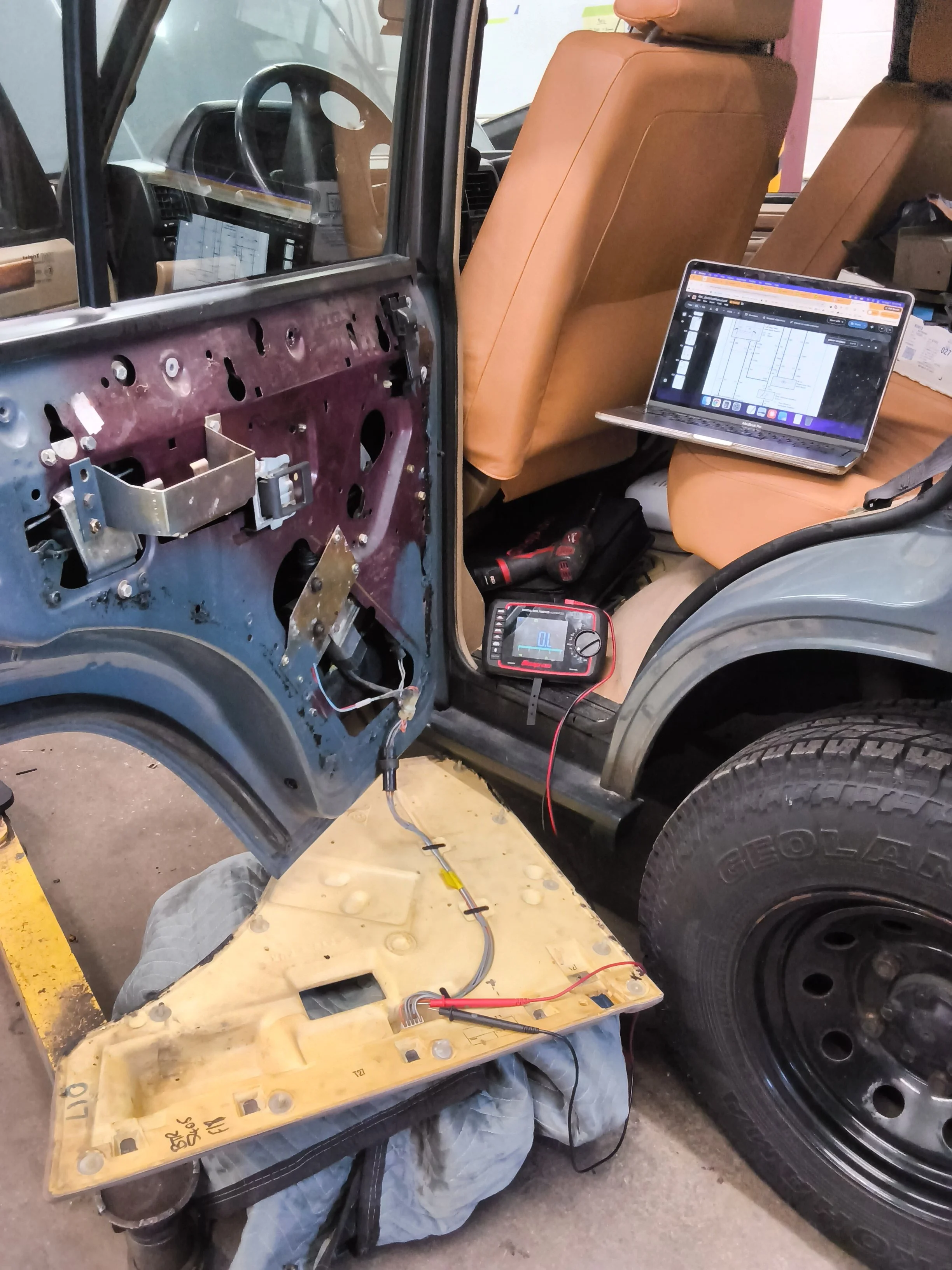
The customer reported that the rear power windows had never worked in their 1994 Range Rover Classic, so we started with the simplest possible checks before assuming there was a problem inside the Window ECU (AMR1282).
The first step was verifying that the rear window isolation switch in the center console was not engaged. It is an easy thing to overlook, and if the isolation switch is active, the rear window switches will not operate.
With that ruled out, we removed the left rear door card and began testing the circuit at the door. Using a multimeter, we checked for the expected voltage and verified the ground connections. We also performed continuity and resistance checks on the wiring inside the door to make sure we were not dealing with a broken conductor, damaged connection, or excessive resistance somewhere in the harness.
Nothing obvious showed up at the door, so we worked our way forward through the circuit.
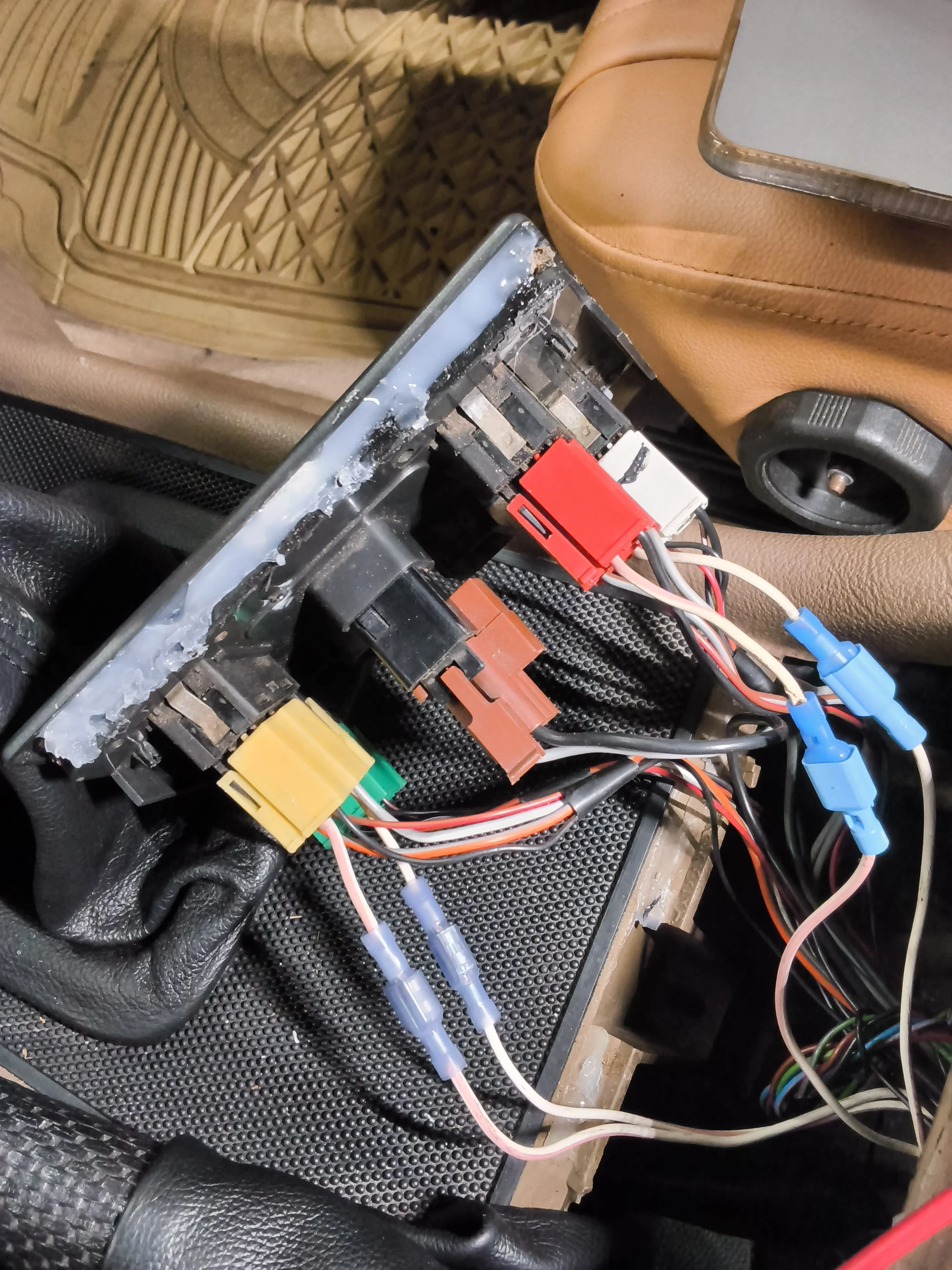
At the center console, we repeated the same basic electrical checks. We verified the wiring, grounds, and continuity around the window switches and isolation switch. Everything continued to point further upstream, but the rear windows were still completely inoperative. Note, more clues of someone being in here before applying repairs.
The next stop was the Window ECU.
On this vehicle, the rear window system is controlled by the AMR1282 Window ECU located behind the glovebox. We removed the glovebox door to gain access and began checking the circuit at the module itself. We probed the white and pink wire at the ECU looking for power, but once again found nothing.
At that point, the ECU needed to come out for bench testing.
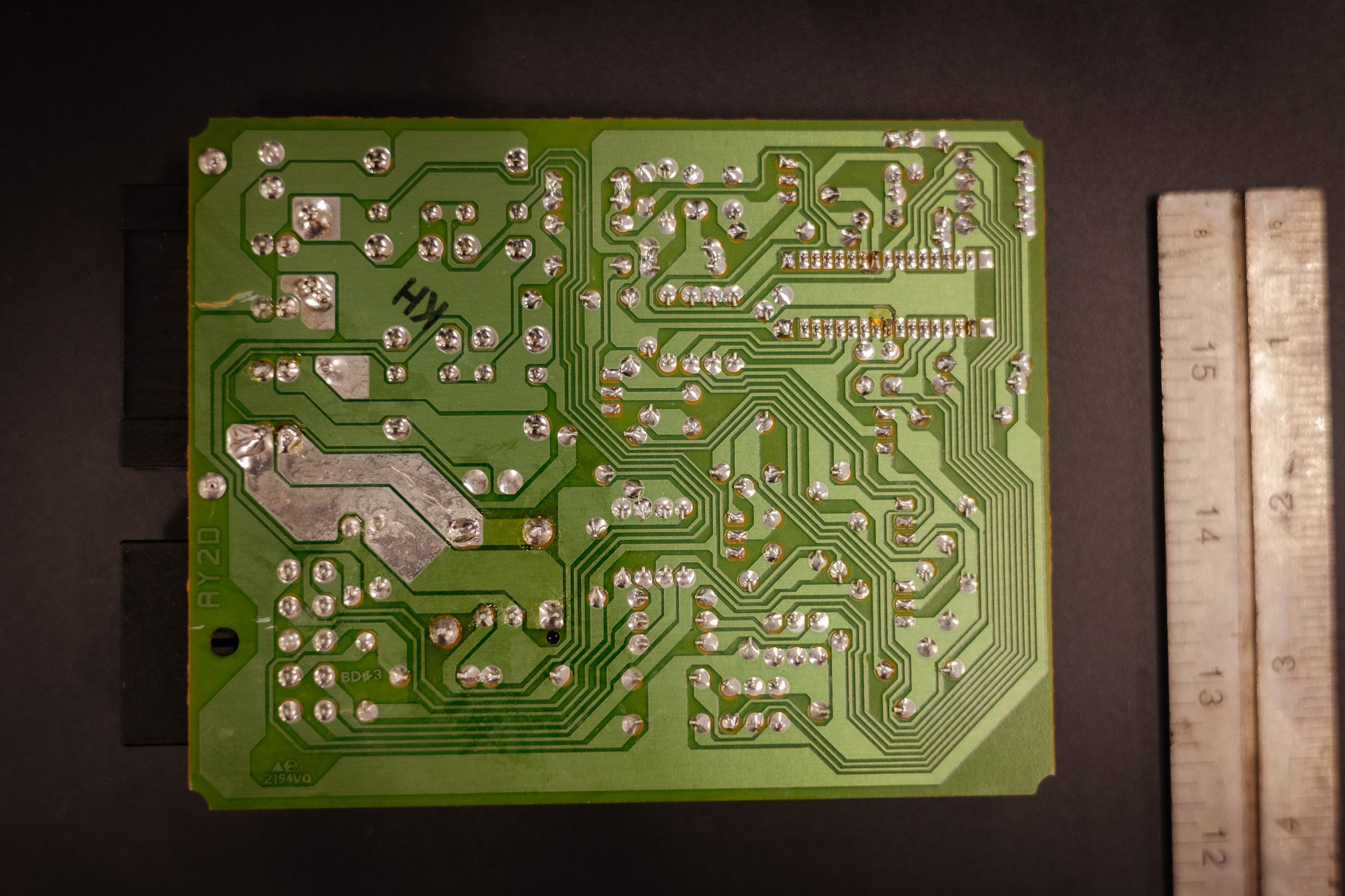
Once the AMR1282 was removed and opened up, the first thing that became obvious was that someone had already been inside it. Several solder joints had previously been reflowed, presumably in an attempt to repair the same rear window problem.
Reflowing solder is a common first attempt on older electronic modules because cracked or fatigued solder joints can cause intermittent or failed circuits. In this case, however, someone had already tried that approach and the rear windows were still dead.
That meant it was time to actually test the components on the board.
Testing quickly led us to the rear window relay, the black rectangular component mounted to the circuit board. The relay tested faulty, giving us a clear failure point rather than another reason to simply reflow the board and hope for the best.
A few minutes later, the original relay was removed. The solder pads and surrounding area were cleaned up, and a new relay was fitted to the board.
With the repair complete, we performed a full bench test of the AMR1282 before reinstalling it in the truck. The ECU passed testing, so it went back behind the glovebox and the system was tested again under normal operating conditions.
The result was exactly what we were looking for.
Both rear windows were fully operational.
This repair is a good example of why proper electrical diagnosis matters. The AMR1282 has a reputation for solder joint problems, but reflowing solder is not always the fix. In this case, the board had already been reworked by someone else and the actual fault was a failed relay.
Following the circuit from the door, through the switches and wiring, and finally into the ECU allowed us to identify the failed component and properly repair the original module instead of continuing to replace parts based on assumptions.
Having rear window issues too? Want a proper repair over a bypass kit? Reach out and we can get you squared away.